

Site Search
552 results for open portal PROBLEMGO.COM how to get VIP treatment in prison with money Randers
- Product at a glance- Children
- [pdf] G2 - Application for Change
- [pdf] G3 - Application for Change
-
Policy endorsement: Contracts and group benefits plan booklet updates related to BC PharmaCare Biosi
As we announced in the June 2019 issue of eNews, BC PharmaCare recently introduced a new Biosimilars Initiative that ends coverage of three biologic drugs, including Remicade, Enbrel, and Lantus. These drugs will no longer be eligible in British Columbia for most conditions for which lower-cost biosimilar versions are available. Patients in the province with these conditions will be required to switch to biosimilar versions of these drugs by Nov. 25, 2019 in order to maintain their coverage under BC PharmaCare.
The following table outlines the affected originator drugs and their biosimilars.
Drug Originator Biosimilar etanercept Enbrel® Brenzys®
Erelzi™infliximab Remicade® Inflectra®
Renflexis®insulin glargine Lantus® Basaglar™
Biologics are drugs that are engineered using living organisms, such as yeast and bacteria. Biosimilars are highly similar to the originator drugs they are based on and most have been shown to have no clinically meaningful differences in safety or efficacy.
To ensure this provincial change doesn’t result in your clients' plans paying additional drug costs, we are aligning our drug eligibility for these three biologic drugs with that of BC PharmaCare.
To facilitate this change, we are amending some of the wording in our contracts and booklets, effective Oct. 1, 2019. Below are links to the Endorsement to the Master Policy and the Summary of Master Booklet Wording Changes for those amendments. Please download and save these policy endorsement documents for your files.
In addition, please remind your clients to provide their plan members with a copy of the Summary of Master Booklet Wording Changes. The next time your clients amend their benefits plans, the updated wording will be included in their group benefits plan bookletsDOWNLOAD ENDORSEMENT TO THE MASTER POLICY
DOWNLOAD SUMMARY OF MASTER BOOKLET WORDING CHANGES
As of Nov. 25, 2019, Remicade and Enbrel will no longer be eligible for BC plan members with conditions for which lower-cost biosimilar versions of the drugs are available. These plan members will be required to switch to the biosimilar versions of these drugs in order to maintain eligibility on the Equitable Life drug plan.
We will be communicating with affected claimants in the coming weeks to allow them ample time to change their prescription and avoid any interruptions in their treatment or their coverage.
We intend to take a similar approach to Lantus. However, we are still investigating the options to implement this change. We will be communicating with you in the coming weeks to confirm our approach for this drug.
If you have any questions about this change, please contact your Group Marketing Manager or myFlex Sales Manager.
® and ™ denote trademarks of their respective owners -
Insights from a pandemic: Long-term COVID-19 drug risks
For the remainder of 2020 and beyond, COVID-19 will continue to add to the existing pressures driving up drug costs. Examples of contributing factors include:
- Claims for acute drugs will likely increase as elective surgeries resume and plan members address non-emergency health issues that were left unattended during COVID-19.
- Plan members whose employers are facing financial strain due to COVID-19 may stock up on their prescriptions in anticipation of losing their job and/or their benefits.
- An ongoing increase in the prevalence and severity of mental health issues and chronic conditions. In May and June, we saw a dramatic increase in the number of claimants for depression, ulcers, blood pressure and diabetes, and depression was associated with 1 in 5 claimants.
All trends thus far suggest we can expect about a 10% increase in average paid amounts per certificate in 2020 compared with 2019. But the impact won’t be the same for all groups. There will be significant variations, particularly for smaller groups, and some may see much larger cost increases.
Unknown COVID-19-related risks
Another risk exposure may come from the costs associated with drugs used to treat or prevent COVID-19. There are currently numerous vaccines in development, and more than 300 clinical trials are underway for both new and existing drugs to determine their effectiveness in treating the virus.
The cost of any vaccine or whether government or private plans will pay for it is unknown. Regardless, there will likely be other drugs indicated for the treatment or prevention of COVID-19 that private plans will be expected to cover. The cost of this impact for private payers is unknown, but potentially high.
Another unknown is what will happen with dispensing fees. While most provinces have lifted their 30-day prescription refill limits, it remains to be seen whether pharmacies will resume dispensing 60- and 90-day refills at pre-COVID levels for private plans. If not, this would mean the dispensing fees will continue to drive up drug costs.
Advisor opportunity
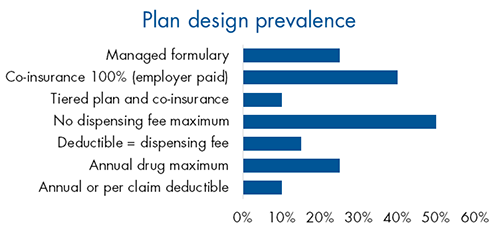
Despite the increase in drug plan risk in recent years, little has changed in plan design trends. Very few plan sponsors have adopted managed plans or other plan design options that could help manage risk.
This presents an opportunity for advisors to educate their clients about the risks their drug plan may be exposed to and the options available to manage that risk.
A practical starting point for those conversations is our Drug Plan Design Tool. With two simple questions, it can help confirm your client’s objectives and identify some best-fit solutions for their plan. Ask your Group Account Executive or myFlex Sales Manager for a copy of the tool.
-
Responding to Ontario’s biosimilar switch initiative
We are changing coverage for some biologic drugs in Ontario in response to the province’s biosimilar initiative. These changes will help protect your clients’ plans from additional drug costs that may result from this government policy while providing access to equally safe and effective lower-cost biosimilars.
Ontario’s provincial biosimilar initiative
Announced in December 2022, Ontario’s biosimilar switch program ends coverage of eight biologic drugs for Ontario residents covered by the Ontario Drug Benefit (ODB). The transition to biosimilar versions of these drugs began on March 31, 2023. ODB recipients using these drugs will be required to switch to biosimilar versions of these drugs by December 29, 2023, to maintain their provincial coverageEquitable Life’s response
To ensure this provincial change doesn’t result in your clients paying additional and avoidable drug costs, we are changing coverage in Ontario for most biologic drugs included in the provincial initiative.
Beginning October 1, 2023, plan members in Ontario will no longer be eligible for most originator biologic drugs if they have a condition for which Health Canada has approved a lower cost biosimilar version of the drug.** These plan members will be required to switch to a biosimilar version of the drug to maintain coverage under their Equitable Life plan.Communicating this change to plan members
We will inform any affected plan members in early August of the need to switch their medications so that they have ample time to change their prescriptions and avoid any interruptions in treatment or coverage.Will this change impact my clients’ rates?
Any cost savings associated with the change will be factored in at renewal.What is the difference between biologics and biosimilars?
Biologics are drugs that are engineered using living organisms like yeast and bacteria. The first version of a biologic developed is known as the “originator” biologic. Biosimilars are highly similar to the drugs they are based on and Health Canada considers them to be equally safe and effective for approved conditionsQuestions?
** The list of affected drugs is dynamic and will change as Ontario includes more biologic drugs in its biosimilar initiative, as new biosimilars come onto the market, and as we make changes in drug eligibility.
If you have any questions about this change, please contact your Group Account Executive or myFlex Sales Manager. - [pdf] Equitable GIF Registered Application
- [pdf] Equitable GIF TFSA Application
-
New online course available
Boost your knowledge and earn CE Credits
Looking to deepen your understanding of Universal Life insurance and get a new CE Credit?
Equitable is excited to offer a new addition to our online learning center: The mechanics of Universal Life. Whether you are new to the concept or looking to refresh your expertise, this course will help provide the knowledge you need to start conversations with clients.
Our CE credit courses allow you to learn at your own pace and earn CE credits quickly and easily.
Available Courses:
• The mechanics of Universal Life *NEW*
• Introduction to Whole Life Insurance
• Participating Whole Life for the Children’s Market – A head start for tomorrow
• Path to Success - Expert Advice on Navigating CI Sales
• Ensuring a Compliant, Needs-based Insurance Sale
• Where UL Fits in your product portfolio
• Building your business with Critical Illness insurance
• Harness the Power of Whole Life Cash Value
A few important notes before you get started:
• The programs are hosted on Teachable: https://equitable-life-education.teachable.com
• Username: Please use your email address that you are contracted with
• Password: Equitable
• Please use Google Chrome to access the courses
You can earn CE credits right away when you complete these courses.
Start earning CE Credits!
Check out the individual insurance online learning centre on EquiNet to stay up to date on new courses.
All courses are accredited by Alberta Insurance Council, Insurance Council of Manitoba, The Institute for Advanced Financial Education, and Chambre de la sécurité financière*.
Questions?
Contact your local wholesaler.
Are you having trouble logging in?
Email equitableiimarketing@equitable.ca for assistance. - EZcomplete Training and Resources