

Site Search
281 results for PAPHOS.SNOWNOW.ORG buying clophedrone 3-CMC Paphos magnificent escrow market list
- About
- [pdf] Manulife Bank Specialized Lending Contact List
-
Responding to Alberta's Biosimilar Initiative
Beginning March 15, 2021, we are changing coverage for some biologic drugs in Alberta in response to the province’s Biosimilar Initiative. These changes will help protect your clients from additional drug costs that may result from this new government policy while still providing access to equally safe and effective biosimilars.
What is Alberta’s Biosimilar Initiative?
Alberta’s Biosimilar Initiative will end provincial coverage of several originator biologic drugs for some or all conditions beginning on Jan. 15, 2021. Patients 18 and over who are using these drugs for the affected conditions will be required to switch to biosimilar versions of the drugs to maintain coverage under the province’s government drug plan.
What is the impact on private drug plans?
Industry response to Alberta’s Biosimilar Initiative has the potential to significantly impact your clients’ drug plan costs. If other insurance carriers follow suit with the province and delist the originator biologics, it could expose a plan that doesn’t delist them to significant coordination of benefits risk. (See Case Study below.)
How is Equitable Life responding?
To protect your clients’ plans from paying additional and avoidable drug costs, we are changing coverage in Alberta for most biologic drugs included in the provincial initiative.
As of March 15, 2021, several originator biologic drugs will no longer be covered for plan members of all ages in Alberta. Plan members taking these biologics will be required to switch to the biosimilar versions of these drugs to maintain eligibility under their Equitable Life plan.
What drugs and conditions are affected?
The following table outlines the drugs and conditions that will be affected by this change. The list of affected drugs or conditions is dynamic and will change as Alberta includes more biologic drugs in its Biosimilar Initiative, as new biosimilars come onto the market, and as we make changes in drug eligibility.
Drug name Originator biologic
These drugs will no longer be covered in Alberta for the conditions listed in this table.Biosimilar
Plan members will need to switch to these medications to maintain coverage under their Equitable Life plan.
Affected health conditions
The changes in coverage apply to these conditions.Etanercept Enbrel Brenzys
ErelziAnkylosing Spondylitis
Rheumatoid Arthritis
Polyarticular juvenile idiopathic arthritis (JIA)
Psoriatic Arthritis
Plaque Psoriasis (adults and children)Infliximab Remicade Inflectra
Renflexis
AvsolaAnkylosing Spondylitis
Plaque Psoriasis
Psoriatic Arthritis
Rheumatoid Arthritis
Crohn's Disease (adults and children)
Ulcerative Colitis (adults and children)Insulin glargine Lantus Basaglar Diabetes (Type 1 and 2) Filgrastim Neupogen Grastofil
NivestymNeutropenia Pegfilgrastim Neulasta Lapelga
Fulphila
ZiextenzoNeutropenia Glatiramer* Copaxone Glatect
TEVA-Glatiramer AcetateMultiple Sclerosis *Glatiramer is a non-biologic complex drug.
How will Equitable Life communicate this change to plan members?
We will be communicating with affected claimants in January 2021 to allow them ample time to change their prescriptions and avoid any interruptions in their treatment or their coverage.
Can my client maintain coverage of these biologic drugs?
Traditional groups who wish to opt out of this change and maintain coverage of these originator biologics for Alberta plan members can submit a policy amendment. Amendments must be submitted no later than January 15, 2021. Advisors with myFlex Benefits clients who wish to maintain coverage of these originator biologics for Alberta plan members should speak to their myFlex Sales Manager to confirm their eligibility to opt out of this change.
Will this change impact my clients’ rates?
The rate impact of this change in coverage will be relatively insignificant. Any cost savings associated with the change will be factored in at renewal.
If plan sponsors opt out of these changes and maintain coverage for the originator biologics, it may result in a rate increase. Any rate adjustment will be applied at renewal.
What is the difference between biologics and biosimilars?
Biologics are drugs that are engineered using living organisms like yeast and bacteria. The first version of a biologic developed is also known as the “originator” biologic. Biosimilars are also biologics. They are highly similar to the originator drug they are based on and have been shown to have no clinically meaningful differences in safety or efficacy.
Questions?
If you have any questions about this change, please contact your Group Account Executive or myFlex Sales Manager.
CASE STUDY: The Alberta Biosimilar Initiative and Coordination of Benefits (CoB) risk
CoB risk is real and can be significant, even if a pharmaceutical savings program exists.
The industry response to Alberta’s Biosimilar Initiative has the potential to significantly impact your clients’ drug plan costs. Some insurers may follow the province’s lead and delist these originator biologics. Others may cut back coverage to the cost of the biosimilars or maintain coverage of the originators. These differences could expose a plan that doesn’t delist the originator biologics to significant coordination of benefits risk. Here’s how:
Let’s assume there are two private drug plans – Plan A and Plan B. Both plans are open plans with no deductible. Plan A has 80% co-insurance and Plan B has 100% co-insurance.
BEFORE Alberta’s Biosimilar Initiative
Before Alberta’s Biosimilar Initiative, both plans cover the originator biologics listed above.
Plan A is the first private payer for an Alberta plan member taking an originator biologic drug for Rheumatoid Arthritis. Plan B is the second private payer. The cost of the originator biologic for the plan member is $30,000 annually. Here’s how the coordination of benefits would look before Alberta’s Biosimilar Initiative.

AFTER Alberta’s Biosimilar InitiativeIn response to Alberta’s Biosimilar Initiative, the insurer for Plan A delists the originator biologic and requires plan members to switch to the biosimilar. The insurer for Plan B maintains coverage of the originator biologic. Under this scenario, if the plan member doesn’t switch, Plan B essentially becomes the first payer and sees their annual cost increase by 400% (from $6,000 to $30,000).

Even if the insurer for Plan B cuts back coverage to the cost of the biosimilar or adjusts the paid amount because they have a savings program in place with the drug manufacturer, the impact could be significant. For example, if the insurer cuts back coverage to 50% (or $15,000 annually), Plan B would see a 150% annual cost increase (from $6,000 to $15,000):
-
February 2023 eNews
Responding to Nova Scotia’s biosimilar switch initiative
We are changing coverage for some biologic drugs in Nova Scotia in response to the province’s biosimilar initiative. These changes will help protect your clients’ plans from additional drug costs that may result from this new government policy while providing access to equally safe and effective lower-cost biosimilars.Nova Scotia’s provincial biosimilar initiative
Announced in February 2022, the Nova Scotia Biosimilar Initiative ends coverage of seven biologic drugs for residents enrolled in Pharmacare programs.
Pharmacare patients in the province using these drugs will be required to switch to biosimilar versions of these drugs by February 3, 2023, in order to maintain their Nova Scotia Pharmacare coverage.Equitable Life’s response
To ensure this provincial change doesn’t result in your clients’ plans paying additional and avoidable drug costs, we are changing coverage in Nova Scotia for most biologic drugs included in the provincial initiative.
Beginning June 1, 2023, plan members in the province will no longer be eligible for most originator biologic drugs if they have a condition for which Health Canada has approved a lower cost biosimilar version of the drug.** These plan members will be required to switch to a biosimilar version of the drug to maintain coverage under their Equitable Life plan.Can my client maintain coverage of these biologic drugs?
Traditional groups who wish to opt out of this change and maintain coverage of these originator biologics for Nova Scotia plan members can submit a policy amendment. Amendments must be submitted no later than April 1, 2023. Advisors with myFlex Benefits clients who wish to maintain coverage of these originator biologics for Nova Scotia plan members should speak to their myFlex Sales Manager to confirm their eligibility to opt out of this change.
Groups that choose to maintain coverage of these originator biologics for existing claimants will also maintain coverage for any originator biologics that we subsequently add to our Nova Scotia biosimilar initiative.Will this change impact my clients’ rates?
The rate impact of this change in coverage will be relatively insignificant. Any cost savings associated with the change will be factored in at renewal.
If plan sponsors opt out of these changes and maintain coverage for the originator biologics, it may result in a rate increase. Any rate adjustment will be applied at renewal.Communicating this change to plan members
We will inform any affected plan members in April of the need to switch their medications so that they have ample time to change their prescriptions and avoid any interruptions in treatment or coverage.What is the difference between biologics and biosimilars?
Biologics are drugs that are engineered using living organisms like yeast and bacteria. The first version of a biologic developed is known as the “originator” biologic. Biosimilars are highly similar to the drugs they are based on and Health Canada considers them to be equally safe and effective for approved conditions.Questions?
If you have any questions about this change, please contact your Group Account Executive or myFlex Sales Manager.
**The list of affected drugs is dynamic and will change as Nova Scotia includes more biologic drugs in its biosimilar initiative, as new biosimilars come onto the market, and as we make changes in drug eligibility.
Changes to New Brunswick drug interchangeability rules
We are introducing changes to help ensure that your clients with voluntary or mandatory generic pricing for their drug plans will benefit more from the cost savings of these two features, regardless of the province where the drugs are dispensed.
Currently, when determining whether a lower-cost alternative is available for a brand-name drug, most insurers only consider drugs that the provincial drug plan identifies as interchangeable.
However, the public drug plan in New Brunswick does not identify a drug as interchangeable if the drug is not listed on its formulary – even if Health Canada has deemed the drug interchangeable.
As a result, plans with mandatory or voluntary generic pricing have continued to reimburse some drugs in New Brunswick based on the cost of the brand-name drug, even if a lower-cost generic alternative is available.
Effective March 20, 2023, if your clients have drug plans with mandatory or voluntary generic pricing, we will adjudicate any drug claims in New Brunswick using the lowest cost alternative that Health Canada approves as bioequivalent. This will occur even if the public drug plan has not identified the drug as interchangeable.
To benefit from this more robust drug plan control, plan sponsors must have mandatory or voluntary generic pricing in place.
For more information about this change or about implementing mandatory or voluntary generic pricing for your clients, please contact your Group Account Executive or myFlex Sales Manager.
New template: plan members eligible for additional coverage
Often, based on salary, some plan members may become eligible to apply for extra Life, Accidental Death & Dismemberment (AD&D), Short Term Disability or Long Term Disability coverage. If this occurs, your clients receive a notification from Group Benefits Administration. We have now developed a template that your clients can provide to applicable plan members if they become eligible for extra coverage. The template makes it simpler for your clients to pass on these details to their plan members efficiently.
The new template is available for download under the Quick Links section of EquitableHealth.ca. It is a fillable PDF form that your clients can complete and provide to their plan members when necessary. The document is called Over the Non-Evidence Limit for Plan Members Notification.
If you have any questions about the template, please contact your Group Account Executive or myFlex Sales Manager. - Chinese Markets
-
Flexibility for a client’s ever-changing life
Term life insurance offers full and partial conversion options to meet changing needs
Life is always changing—whether a client is buying their first home, welcoming a new baby, or sending the kids off to college. While most clients think of term life insurance as a solution to meet a temporary need, they don’t necessarily consider the power of term conversion options to meet their future needs.
Full and partial conversion options can help meet a client’s needs as their life journey and insurance needs change, without having to provide proof of continued good health.
Full conversion:
• With full conversion, clients can convert all of their term coverage from their policy or rider to permanent life insurance. This allows the client to lock in a level premium rate for life.
Partial conversion:
• With a partial conversion, clients can convert a portion of their term coverage from their policy or rider to a permanent plan. This allows them to help cover off both a short-term need and also provides lifetime protection.
Did you know?
Our partial conversion with a term rider carryover is now more flexible than ever. Read more about it here!
For more information, please consult the Equitable Term Life insurance admin guide. -
Let’s “Talk Money”: From first savings to retirement income
Financial Literacy Month may be ending, but the conversation shouldn’t.
Talking with an advisor helps normalize money conversations— including discussions on saving, spending, managing debt, and more. This can help clients feel better and make smarter financial choices. As an advisor, you can guide clients from their first savings through to retirement with Equitable® .
Starting out? Clients can consider:
Tax-Free Savings Account (TFSA)
Save for short- or long-term goals and take out money anytime, tax-free.
First Home Savings Account (FHSA)
Save up to $40,000 tax-free for a first home. Contributions may be tax-deductible, and withdrawals are tax-free for buying a qualifying home.
Growing wealth? Clients can consider:
Registered Retirement Savings Plan (RRSP)
Contributions may be tax-deductible. Good for long-term savings—money grows tax-free until retirement.
Guaranteed Interest Account (GIA) / Daily Interest Account (DIA)
Earn steady interest with flexible terms. Available in a TFSA, RRSP, and FHSA.
Retirement ready? Clients can consider:
Payout annuities
Guaranteed income for life or a set time. Helps make sure savings last.
Resources to support these conversations



Use our easy online tools: EZcomplete® to apply and EZtransact™ for transactions. Let’s help Canadians save smarter—one step at a time. When we work together, success is mutual.
Reach out to your Director, Investment Sales if you have questions. -
Repositioned Wealth Accumulator available
Repositioned Equimax Wealth available now
As we continue to grow to meet the needs of various market segments, our product options for your high net worth (HNW) clients have also been improved. Equimax Wealth Accumulator® has been repositioned to meet the needs of your high net worth clients by providing more deposit room and competitive early cash values.
Equimax Wealth is now repositioned for your high net worth clients
Equimax Wealth Accumulator is now targeted for clients ages 45 to 65 with an insurance need but also looking for tax advantaged growth as an alternative to traditional investments. It allows your clients to achieve both while diversifying their portfolio and saving taxes, particularly for corporations.
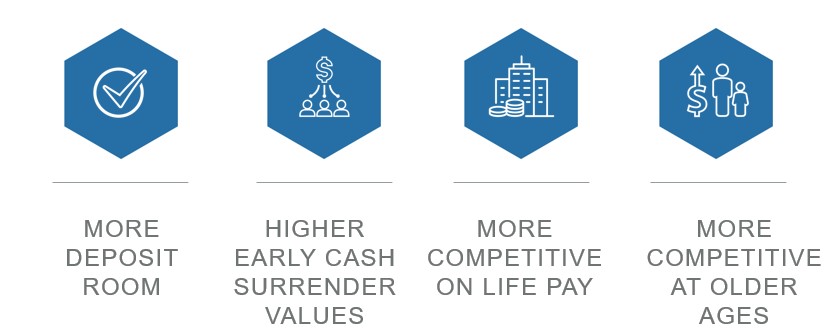
Highlights of the repositioned Equimax Wealth Accumulator:
- More deposit room - Allows for significantly more deposit room by reducing the initial death benefit. This means more money can be paid into the policy to promote the tax-advantaged investment growth.
- Higher early cash surrender values - We are more competitive on total cash value in years 1 to 10 in the target market ages of 45-65. The higher extra deposit room and early surrender cash value allows the illustration to show an earlier premium offset, which is key for the HNW market.
- More competitive on life pay - Improvements to life pay more notable than 20 pay. Reduced premiums for most male and female non-smokers in our target market (ages 45-65) as well as 2, 3, and 4 year improvement in illustration of premium offset.
- More competitive at older ages - A shift in the target market means you can support older clients in the HNW market. The Equimax Wealth Accumulator is now more competitive at ages 45-65.
Learn more
For full details on the transition, please see our transition rules.
For more information on this product, please visit the Equimax page on Equinet.
- [pdf] Segregated Fund Annual Report - December 31, 2025
- [pdf] Collateral Assign List